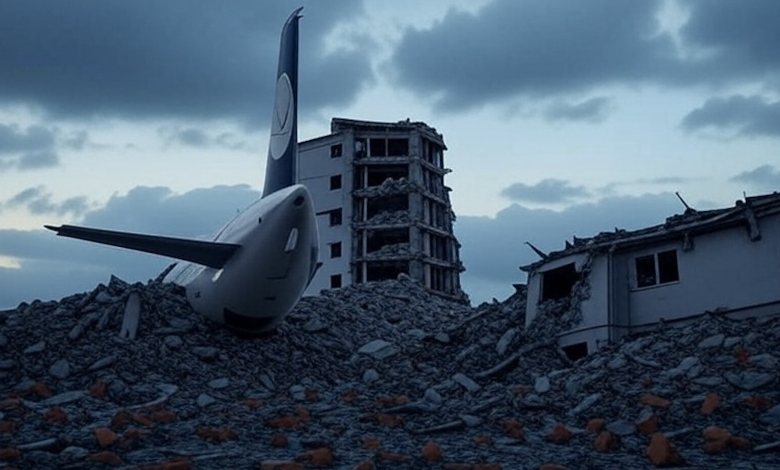
The preliminary investigation into the catastrophic crash of Air India Flight 171 on June 12, 2025, has released its initial report, shedding light on a baffling sequence of events that led to the deaths of 260 people. The Boeing 787-8 Dreamliner, en route from Ahmedabad to London Gatwick, plummeted 32 seconds after takeoff, crashing into a medical college hostel near the airport.
Released on July 12 by India’s Aircraft Accident Investigation Bureau (AAIB), the report points to a critical failure involving the aircraft’s fuel control switches but stops short of assigning blame, leaving aviation experts and the public grappling with unanswered questions.
The Crash and Early Clues
Flight 171 lifted off at 13:38 IST (08:08 UTC) from Sardar Vallabhbhai Patel International Airport with 230 passengers and 12 crew members. Flight data indicates the aircraft reached a maximum altitude of 625 feet and an airspeed of 180 knots before losing thrust, culminating in a fiery impact 1.7 kilometers from the runway.
The sole survivor, British citizen Vishwash Kumar Ramesh, escaped from a detached section of the fuselage, while the crash claimed 241 lives onboard and 19 on the ground. The AAIB’s report, based on data from the enhanced airborne flight recorders, reveals that both engines lost power after their fuel control switches moved from “RUN” to “CUTOFF” within a second of each other shortly after takeoff, a manoeuvre typically reserved for post-landing procedures.
Cockpit voice recordings add to the mystery, capturing one pilot asking, “Why did he cut off?” with the other responding, “I did not do so.” The identities of the speakers, Captain Sumeet Sabharwal and First Officer Clive Kunder, remain undisclosed, fuelling speculation about human error, mechanical malfunction, or even deliberate action. The report notes that the switches were later returned to “RUN,” with one engine partially regaining thrust, but the recovery came too late to avert disaster.
Technical and Procedural Gaps
The investigation highlights potential vulnerabilities in the aircraft’s systems. The fuel control switches, equipped with a locking mechanism to prevent accidental activation, suggest the movement was intentional or triggered by an undetected fault. Simulator tests by Air India pilots, conducted a week after the crash, demonstrated that a single-engine operation could have sustained flight under similar conditions, casting doubt on a spontaneous dual-engine failure.
However, the report rules out mechanical issues with the General Electric GEnx-1B70 engines or the Boeing 787’s design, stating, “There are no recommended actions for B787-8 and/or GE GEnx-1B engine operators and manufacturers.”
A 2018 FAA advisory warned of potential disengagement of locking mechanisms on similar Boeing fuel control switches, a concern Air India did not address, as compliance was not mandatory. The report also notes the deployment of the Ram Air Turbine (RAT), an emergency power backup, indicating a major systems failure. Yet, the absence of a full cockpit transcript or video recorder data, despite NTSB recommendations, limits clarity on the pilots’ actions.
Controversy and Industry Response
The preliminary findings have ignited controversy. Pilot associations, including the Indian Commercial Pilots Association (ICPA), have condemned the report’s reliance on selective cockpit audio, arguing it prematurely suggests human error without evidence. Posts on X reflect public frustration, with some questioning the narrative’s focus on the captain, while others demand transparency.
The AAIB has rebuked “irresponsible” media speculation, urging restraint as the investigation continues. Air India, under Tata Group ownership since 2022, has pledged full cooperation and established the “AI-171 Memorial and Welfare Trust” to support victims’ families.
Boeing and GE Aerospace have sent experts to assist, but the lack of immediate safety recommendations suggests confidence in the aircraft’s broader reliability, although this has not quelled skepticism given recent Boeing scrutiny post-737 MAX incidents.
Global Implications and Next Steps
The crash, the first fatal accident involving a 787 since 2011, underscores the need for modernized navigation and safety systems. The AAIB’s call for further analysis of fuel samples, wreckage, and post-mortem reports signals a year-long process before a final report. Internationally, the incident may push for mandatory cockpit video recorders and stricter adherence to FAA advisories, particularly in regions with aging infrastructure.
For India’s aviation sector, which handles 6,900 daily flights and contributes 1.5% to GDP, the crash highlights maintenance and regulatory gaps. With nine safety violation notices issued to Air India in six months, the government has allocated resources for fleet upgrades.
Yet, the unresolved question of “who or what turned the switches?” looms large, challenging the industry to balance growth with unassailable safety. As investigators sift through the wreckage, the Flight 171 tragedy may yet drive a global reevaluation of aviation technology and human oversight, potentially saving lives in its wake.