


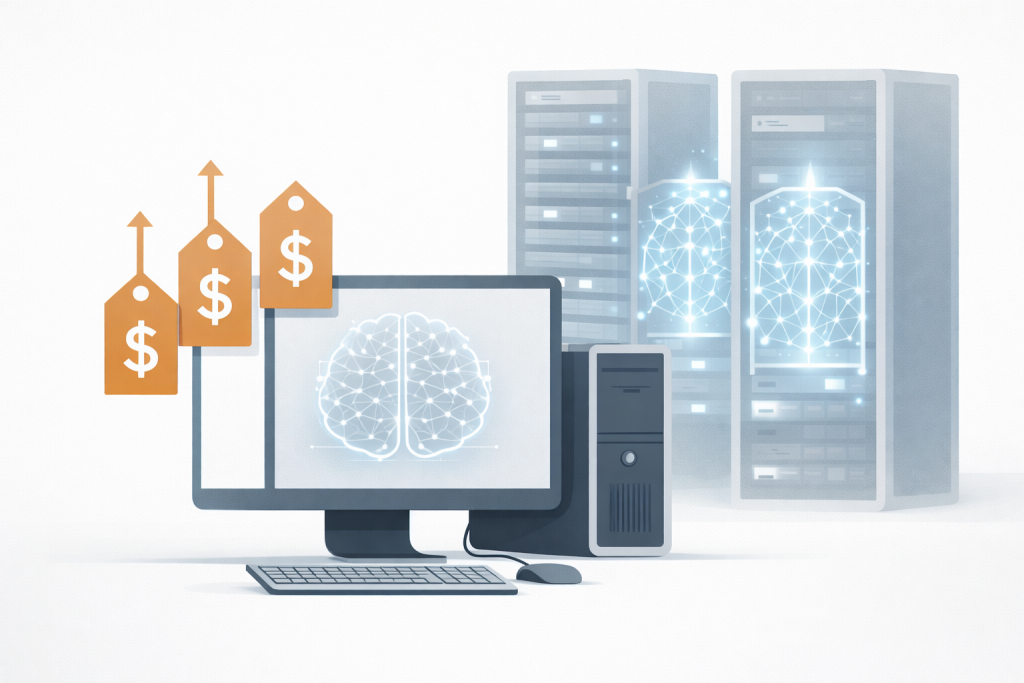
The artificial intelligence boom is starting to hit consumers in an unexpected place: the price of personal computers.
As major technology companies race to build massive AI data centers, they are buying unprecedented quantities of memory chips. The surge in demand has pushed memory prices sharply higher, squeezing PC makers and threatening to raise costs for everyday buyers.
High performance computer builders say the impact is already being felt. One long-running custom PC company has seen the cost of memory components triple since late summer, forcing it to raise prices on flagship machines by thousands of dollars.
“This is not a short-term spike,” a PC industry executive told Kernel News. “AI demand is absorbing supply at a scale we have never seen before.”
Memory chips like RAM and flash storage are essential not only for AI servers, but also for laptops, smartphones, and gaming systems. Chip manufacturers are prioritizing higher-margin AI customers, which has reduced availability for consumer products and driven prices upward.
Market analysts estimate that rising memory costs alone could increase the price of a typical PC by more than 20 percent this year. Some manufacturers have already acknowledged that higher component prices are weighing on sales.
The shift is reshaping the global memory industry. After decades of volatile boom-and-bust cycles, the remaining major suppliers are now enjoying record revenues. Several have announced massive investments in new factories, but those facilities will take years to come online.
The AI workload itself is also changing how memory is used. New high-bandwidth memory designs, which stack chips vertically for faster data transfer, are becoming central to advanced AI systems. These components are more expensive and harder to manufacture, adding further pressure to supply chains.
Large PC brands may be somewhat insulated through long-term contracts, but smaller builders and budget buyers are likely to feel the pinch first. For consumers hoping to upgrade or build a PC this year, the timing may prove costly.