


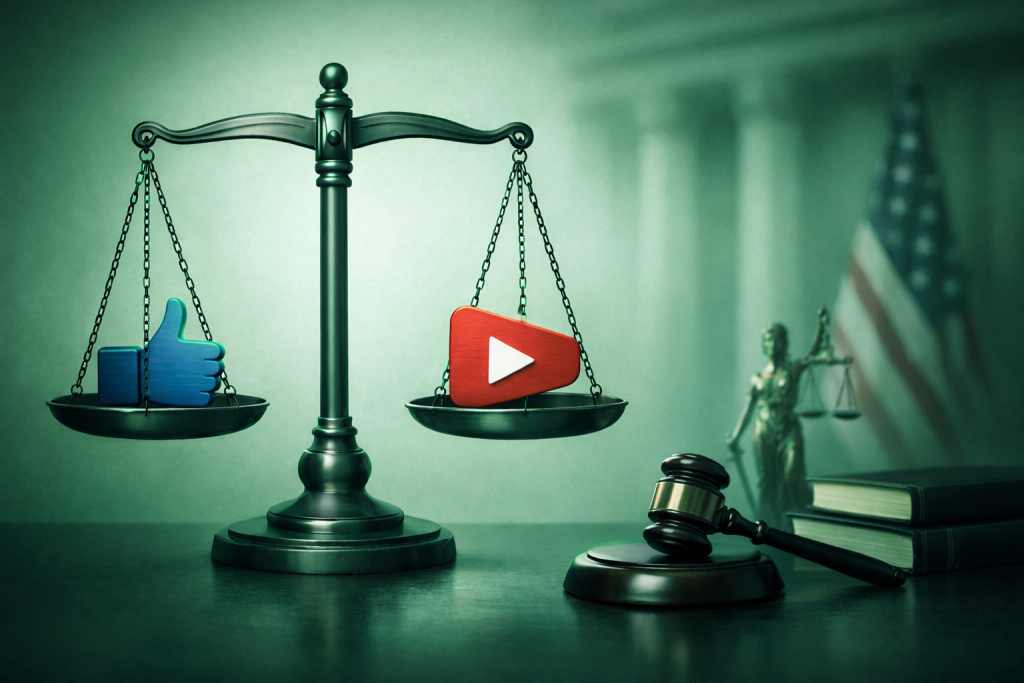
Opening arguments this week marked a pivotal moment for the technology industry as U.S. courts began hearing closely watched lawsuits accusing major social media platforms of deliberately fostering addiction among children and teenagers. The cases, unfolding in Los Angeles and New Mexico, target Meta Platforms and Alphabet, the parent company of YouTube.
Plaintiffs argue that the companies engineered their products with features designed to maximize engagement at the expense of young users’ mental health. In court filings and opening statements, attorneys compared platforms such as Instagram and Facebook to digital casinos, asserting that infinite scrolling, algorithmic recommendations, and constant notifications create compulsive behavior similar to gambling addiction.
At the center of the lawsuits is the claim that these design choices constitute a form of personal injury, particularly for minors whose developing brains are more vulnerable to reward driven feedback loops. Families and state officials contend that anxiety, depression, and attention disorders have been exacerbated by prolonged exposure to such systems, and that internal research at the companies showed awareness of these risks.
A defining test for platform responsibility
Lawyers for YouTube rejected the characterization of their service as a social media platform, instead describing it as an entertainment and video hosting service where users primarily consume rather than interact. This distinction, they argue, limits the company’s responsibility for addiction like outcomes. Meta has similarly defended its products, pointing to parental controls, safety tools, and user choice as evidence that harm is neither inevitable nor intended.
Legal experts say the trials represent one of the most significant attempts yet to apply product liability concepts to digital design. A ruling in favor of the plaintiffs could set a powerful precedent, opening the door to further litigation and forcing companies to rethink engagement driven business models.
Beyond the courtroom, the implications are global. Regulators in Europe, Asia, and elsewhere are already exploring stricter rules on youth safety, algorithmic transparency, and platform accountability. A U.S. judgment establishing that design features can be legally harmful would likely accelerate those efforts.
For now, the technology sector is watching closely. The outcome may determine whether the mechanics that have defined the social media era remain a commercial norm or become a legal liability.