


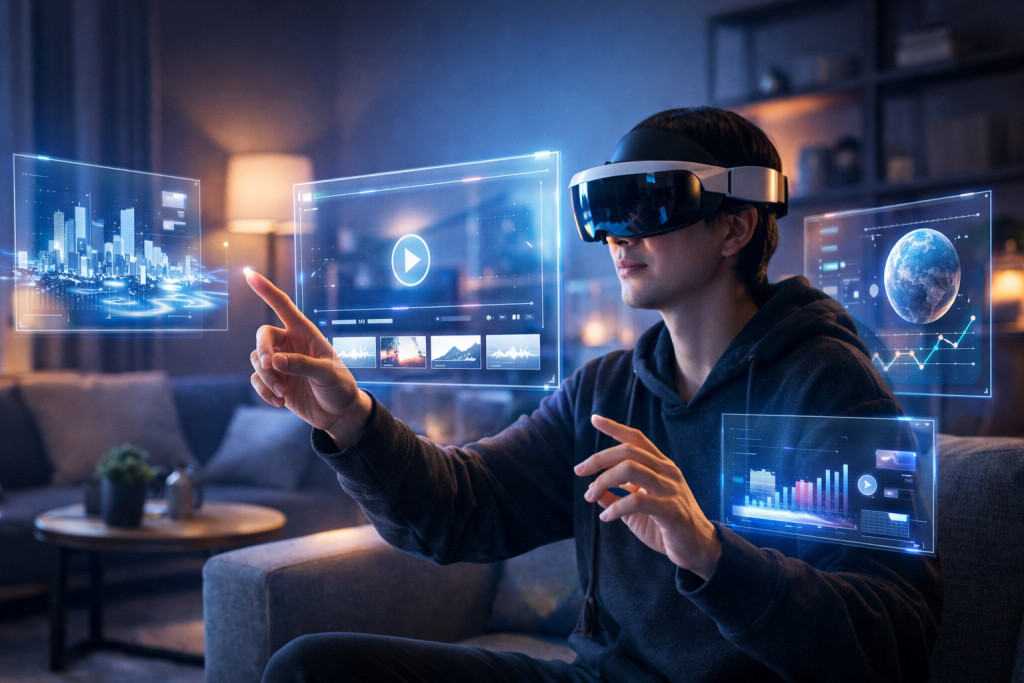
Meta has unveiled a new wave of mixed reality capabilities for its Quest headsets, signaling a renewed and more focused push into spatial computing as the company looks beyond gaming toward everyday digital interaction. The updates, which blend physical and virtual environments with greater precision, mark a significant step in Meta’s long-term ambition to build the next major computing platform.
At a showcase event led by CEO Mark Zuckerberg, Meta demonstrated how its latest Quest devices can seamlessly overlay digital objects onto the real world, enabling users to interact with apps, media, and productivity tools in a shared physical space. Improvements in hand tracking, environmental mapping, and passthrough video have brought the experience closer to what the company describes as “true mixed reality,” narrowing the gap between augmented and virtual environments.
The announcement builds on the foundation laid by devices such as the Meta Quest 3, but introduces enhanced software capabilities that developers can leverage across gaming, fitness, remote work, and education. Meta is also expanding its developer ecosystem, encouraging creators to design applications that treat the physical world as part of the interface rather than a limitation.
Competing for the Next Computing Platform
Meta’s renewed momentum in mixed reality comes amid intensifying competition in the spatial computing space, particularly following the launch of the Apple Vision Pro. While Apple has positioned its device as a premium productivity and entertainment platform, Meta continues to emphasize accessibility and scale, aiming to bring mixed reality experiences to a broader audience at lower price points.
Industry analysts suggest that Meta’s strategy hinges on volume and ecosystem growth rather than immediate profitability. By lowering barriers to entry and rapidly iterating on hardware and software, the company hopes to establish its platform as the default environment for immersive applications before competitors can gain significant traction.
The broader implications extend beyond consumer technology. Enterprises are increasingly exploring mixed reality for training, collaboration, and visualization, creating new revenue opportunities for companies that can deliver reliable and scalable solutions. Meta’s latest updates appear designed to capture a share of this emerging market, positioning Quest devices as tools for both work and play.
A Long-Term Bet With High Stakes
Despite the technological progress, Meta’s investment in reality labs remains a subject of scrutiny among investors, with billions of dollars committed annually to research and development. Critics argue that widespread adoption of mixed reality is still years away, raising questions about the pace at which these investments will translate into sustainable returns.
Meta, however, remains steadfast in its vision. Zuckerberg has repeatedly framed spatial computing as the successor to smartphones, a shift that could redefine how people interact with digital content. The company’s latest announcements reinforce that conviction, suggesting that Meta is willing to absorb short-term costs in pursuit of long-term platform dominance.
For users, the immediate impact is a more immersive and versatile headset experience. For the industry, it signals that the race to define the future of computing is accelerating, with Meta determined to remain at the forefront.