


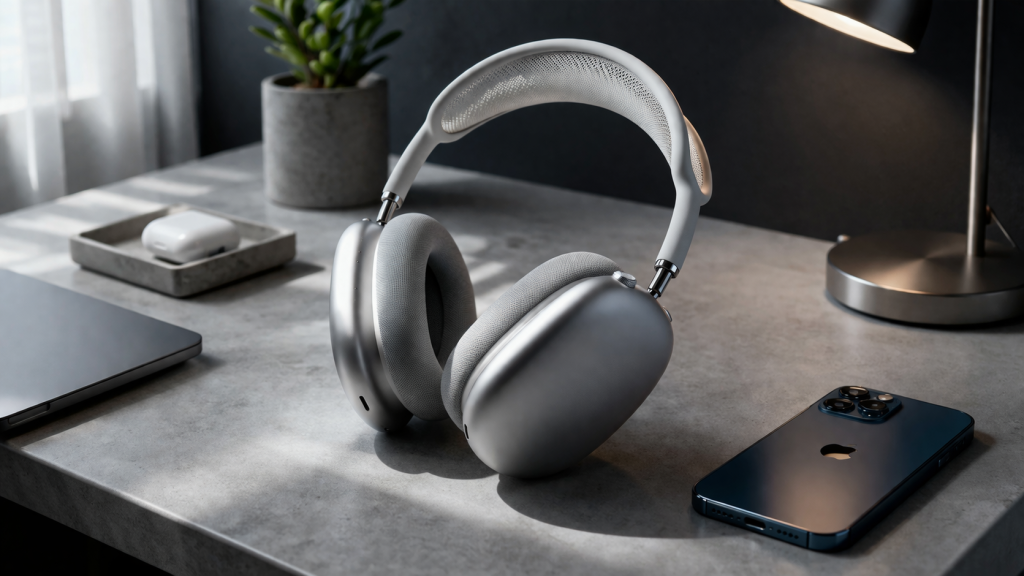
Apple’s latest refresh of its premium over ear headphones, the Apple AirPods Max 2, has landed with a surprisingly restrained response, as consumers and analysts question whether incremental improvements justify the continued premium price.
The new model introduces modest upgrades, most notably refined audio processing and improved noise cancellation that builds on Apple’s existing spatial audio ecosystem. Early reviews suggest that sound clarity and depth have improved, particularly in complex mixes, reinforcing Apple’s position as a leader in high end consumer audio.
Yet beyond these enhancements, the design remains largely unchanged from the original Apple AirPods Max. The same aluminium ear cups, mesh headband, and controversial smart case return, leaving many users questioning whether Apple missed an opportunity to modernise both aesthetics and functionality.
Incremental gains in a competitive market
The most noticeable technical advancement lies in the updated chip architecture, which delivers faster audio processing and more efficient power management. While Apple has not dramatically extended battery life, the gains are sufficient to support longer listening sessions without fundamentally altering user expectations.
Competitors such as Sony WH-1000XM5 and Bose QuietComfort Ultra continue to push aggressive updates in comfort, portability, and price competitiveness. Against this backdrop, Apple’s incremental approach appears increasingly conservative.
Industry analysts note that Apple may be prioritising ecosystem integration over hardware reinvention. Features such as seamless device switching, personalised spatial audio, and deep integration with iOS remain central to the AirPods strategy, even as rivals compete on raw specifications.
Premium pricing under scrutiny
At its current price tier, the AirPods Max 2 faces heightened expectations from consumers who increasingly demand visible innovation alongside performance improvements. The lack of substantial changes in weight, foldability, or case design has emerged as a focal point of criticism.
Still, Apple’s brand strength and ecosystem lock in are likely to sustain strong sales among loyal users. For those already embedded in the Apple ecosystem, the upgrade offers a familiar but refined experience rather than a transformative leap.
Whether this measured evolution reflects confidence or caution remains an open question, but it signals a broader trend in consumer technology where iterative updates are beginning to test the limits of user patience.