


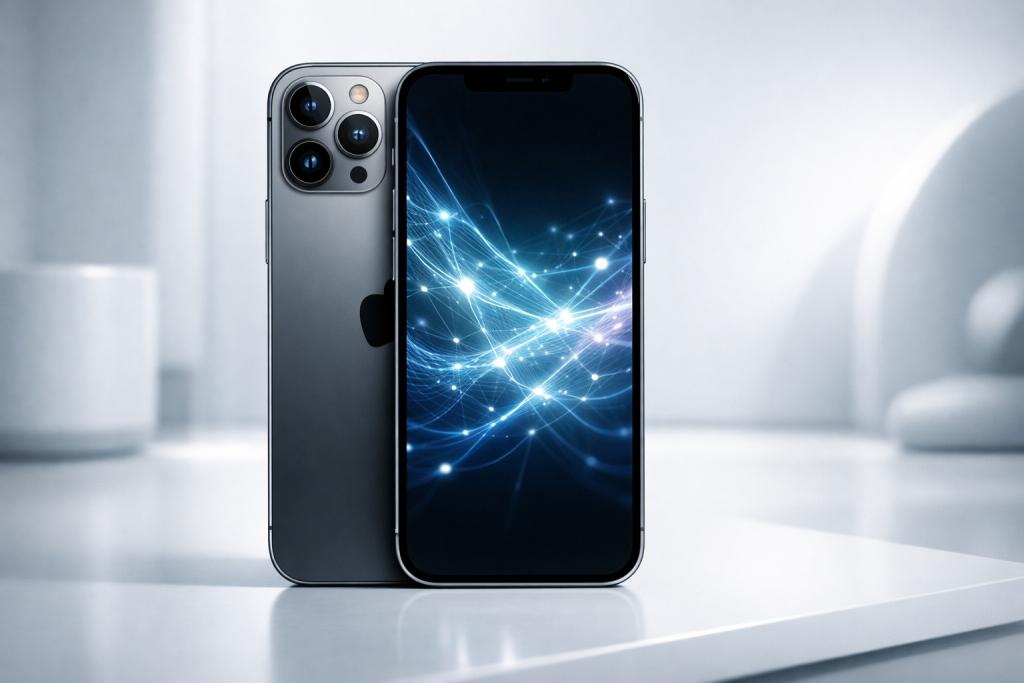
Apple is intensifying its push into artificial intelligence with a strategy that places privacy and on-device processing at its core, setting the stage for a significant shift in how AI is delivered across its ecosystem.
According to industry sources familiar with the company’s roadmap, Apple is accelerating development of AI features designed to run directly on iPhones, iPads, and Macs. This approach stands in contrast to many competitors who rely heavily on cloud-based models, and signals Apple’s intent to differentiate itself through user privacy, speed, and tighter hardware integration.
At the heart of this strategy is Apple’s growing investment in its custom silicon. The company’s latest chips are being optimized to handle increasingly complex machine learning workloads locally, enabling features such as advanced voice assistants, real-time language translation, and intelligent photo and video editing without sending sensitive data to external servers.
A Privacy First AI Vision
Apple’s approach reflects its long-standing stance on privacy as a fundamental user right. By keeping AI processing on-device, the company minimizes data exposure while also reducing latency. This creates a more seamless experience, particularly in applications that require instant responses, such as voice commands or augmented reality.
Executives within Apple have repeatedly emphasized that privacy and AI do not need to be at odds. Instead, the company is attempting to prove that powerful AI systems can operate effectively within the constraints of local hardware.
This philosophy could resonate strongly with consumers and regulators alike, especially as concerns grow around how tech companies handle personal data in the age of generative AI.
Competitive Pressure Mounts
Apple’s renewed AI focus comes amid escalating competition from major players including Microsoft, Google, and OpenAI, all of whom have rapidly advanced cloud-based AI platforms. While Apple has been perceived as slower to release generative AI products, its strategy suggests a longer-term play centered on ecosystem control rather than speed to market.
Analysts note that Apple’s advantage lies in its vertical integration. By designing both hardware and software, the company can optimize AI performance in ways that competitors relying on third-party hardware cannot easily replicate.
At the same time, Apple is expected to introduce hybrid models that combine on-device processing with selective cloud support for more complex tasks, ensuring it remains competitive in areas where local hardware alone may fall short.
What to Expect Next
The company is widely anticipated to showcase its AI advancements at its upcoming developer conference, where new tools for developers could open the door to a wave of AI-powered applications built specifically for Apple devices.
If successful, Apple’s strategy could redefine how AI is experienced by everyday users, shifting the industry toward a model where intelligence is not just powerful, but also personal and private.