


Google DeepMind has introduced a new generation of artificial intelligence capable of understanding and processing multiple forms of data simultaneously, marking a significant step forward in the race to build more human-like AI systems.
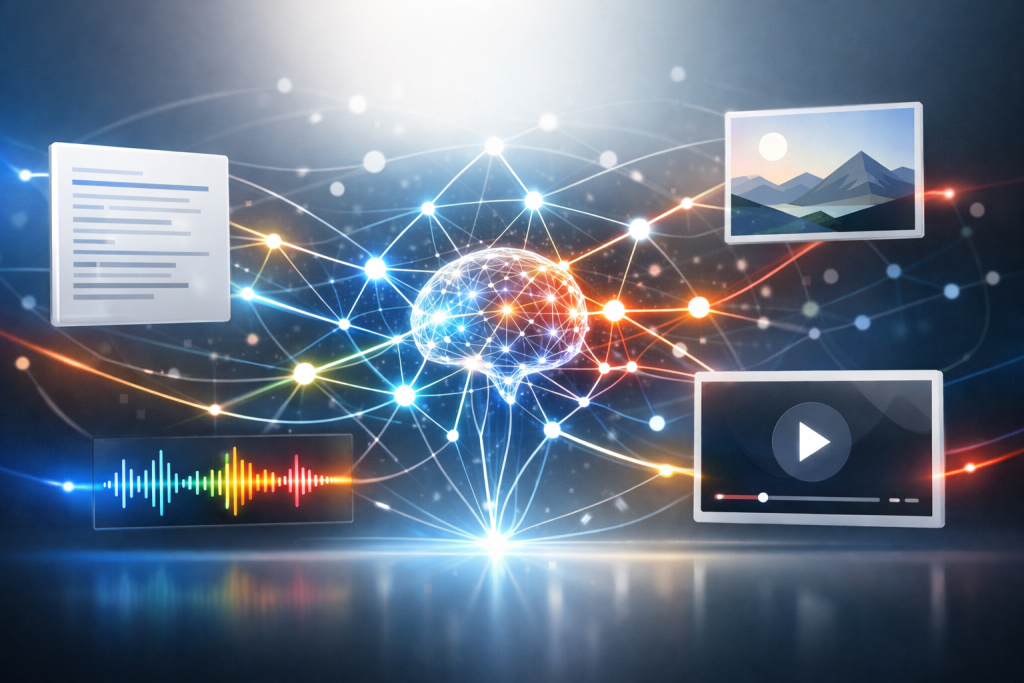
The system, revealed in recent announcements, can interpret and generate responses across text, images, audio, and video in a unified model. This multimodal capability allows the AI to connect information across different formats, enabling more sophisticated reasoning and interaction than traditional single-mode systems.
For Kernel News, this development highlights a growing shift in artificial intelligence, where models are no longer confined to one type of input but are evolving into systems that better mirror how humans perceive and process the world.
A Step Toward General Intelligence
Multimodal AI has long been seen as a key milestone on the path toward more general forms of artificial intelligence. By integrating multiple data streams, these systems can perform tasks that require contextual understanding across different media.
Google DeepMind’s latest model demonstrates the ability to analyze video content while interpreting spoken language and related text, offering a more cohesive understanding of complex scenarios. This could have wide-ranging applications, from advanced virtual assistants to scientific research and education tools.
The breakthrough also signals a shift in how AI systems are trained, with larger and more diverse datasets playing a central role in improving performance and adaptability.
Intensifying Competition in AI
The launch comes at a time of intense competition among major technology companies, all vying to lead in the development of next-generation AI. Multimodal systems are increasingly seen as the next frontier, with companies racing to deliver models that can seamlessly integrate into everyday life.
Google DeepMind’s approach emphasizes not only capability but also usability, with a focus on creating systems that can interact naturally with users across different contexts.
Analysts suggest that this could give Google a competitive edge, particularly in areas such as search, digital assistants, and content creation, where understanding multiple forms of input is critical.
Implications for the Future
The introduction of advanced multimodal AI raises important questions about how these systems will be deployed and regulated. As capabilities expand, so too does the need for safeguards to ensure responsible use.
For developers and businesses, however, the opportunities are substantial. A single AI system capable of handling diverse inputs could streamline workflows, enhance creativity, and unlock new possibilities across industries.
Kernel News understands that this technology is still evolving, but its trajectory is clear. AI is moving beyond narrow tasks toward a more integrated and intuitive role in daily life.