


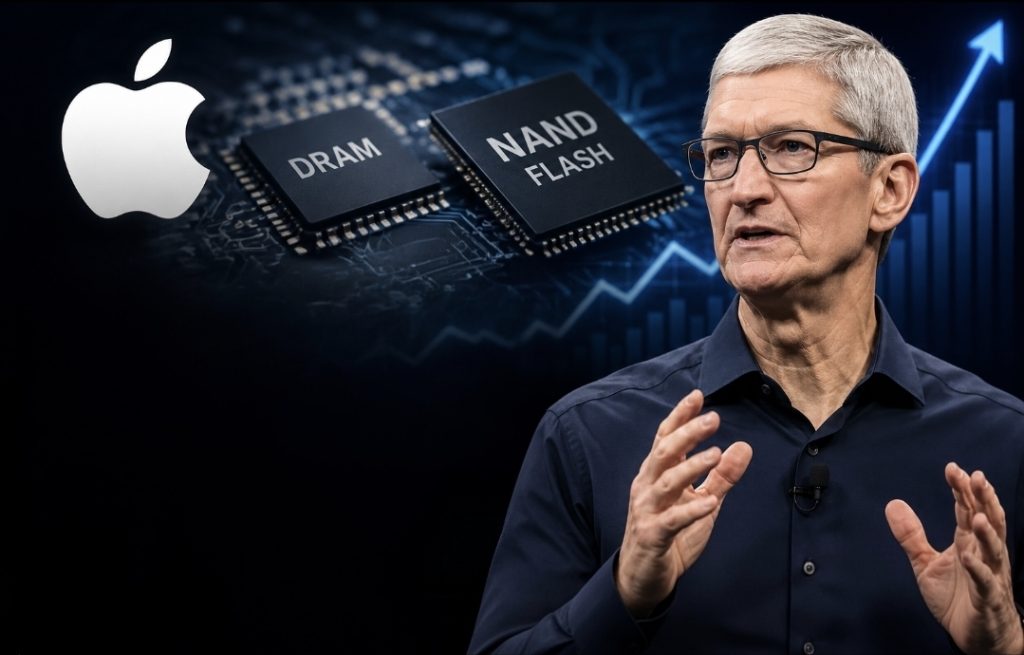
Apple is preparing for a significant shift in its pricing strategy after confirming that surging memory and storage chip costs will inevitably push product prices higher across future devices. The company attributes this pressure to an AI-driven global demand spike that has strained DRAM and NAND flash supply chains, two core components used in iPhones, Macs, and iPads. CEO Tim Cook told the Wall Street Journal that Apple can no longer fully absorb these rising costs, signaling a direct impact on upcoming product generations. The development reflects a broader semiconductor squeeze driven by massive expansion in AI data centers worldwide, which now compete aggressively with consumer electronics manufacturers for limited memory supply.
AI Boom Triggers Global Memory Chip Shortages
The rapid expansion of artificial intelligence infrastructure has sharply increased global demand for high-performance memory chips, especially DRAM and NAND flash used in both AI servers and consumer electronics. AI data centers now consume large volumes of advanced memory modules, pushing suppliers to prioritize enterprise contracts over consumer hardware. This shift has created a supply imbalance that drives up costs across the entire semiconductor ecosystem. Apple now faces higher procurement expenses as chipmakers struggle to meet simultaneous demand from AI firms, smartphone manufacturers, and PC producers. The company previously relied on its scale and long-term supplier agreements to stabilize pricing, but the current shortage limits its ability to offset rising input costs without adjusting retail prices.
Apple’s Pricing Strategy Under Pressure From Supply Chain Costs
Apple’s internal cost structure now reflects significant pressure from elevated DRAM and NAND pricing, which directly affects device assembly costs for iPhones, MacBooks, and iPads. Tim Cook emphasized that Apple prioritizes maintaining product quality and performance, which depends heavily on high end memory components. As suppliers increase prices, Apple must either compress margins or adjust retail pricing to maintain profitability. Industry analysts expect the impact to appear first in premium devices with higher storage configurations, where memory costs form a larger portion of the bill of materials. This marks a notable shift for Apple, which has historically absorbed short terrm component inflation to stabilize consumer pricing.
Broader Tech Industry Faces Ripple Effects From AI-Driven Demand Surge
The pricing pressure does not affect Apple alone, as major technology companies across smartphones, PCs, and cloud infrastructure compete for the same constrained memory supply. Semiconductor manufacturers now prioritize AI server contracts, which deliver higher margins than consumer electronics, further tightening availability for device makers. This dynamic reshapes the global tech supply chain and accelerates a structural shift toward AI centric production priorities. As a result, companies that rely on large scale memory consumption face rising costs and potential delays in product rollout. The ongoing imbalance suggests that memory chip inflation may persist, especially as AI adoption continues to expand across industries.