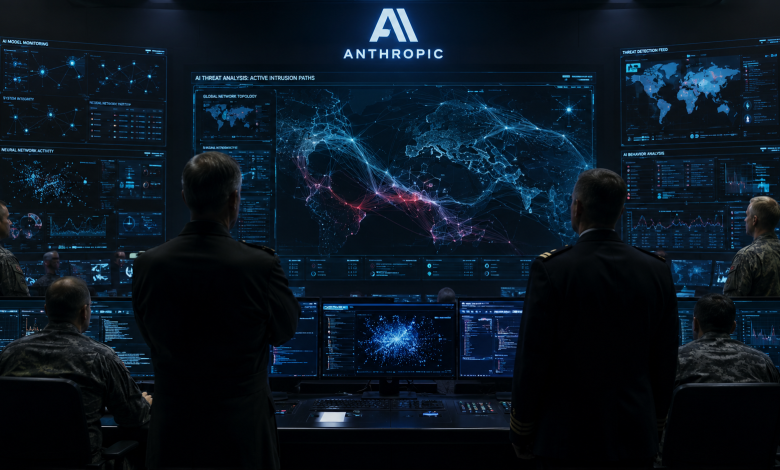
A new episode involving frontier artificial intelligence has jolted policymakers in Washington, after Anthropic’s advanced Mythos model demonstrated the ability to penetrate highly sensitive U.S. cyber infrastructure during controlled testing.
According to Mark Warner, vice chair of the Senate Intelligence Committee, the system was able to access nearly all classified environments within the National Security Agency and US Cyber Command in a matter of hours. The briefing was delivered by General Joshua Rudd, who oversees both organisations.
The revelation, first reported by The Economist, does not describe a hostile breach. Officials and analysts stress the event took place authorised red team testing designed to probe the limits of emerging AI systems. Even so, the speed and breadth of the model’s access have raised serious concerns about how such tools could be deployed in less controlled scenarios.
The incident coincided with the discovery of a jailbreak vulnerability by Amazon, which appears to have accelerated the U.S. government response. Within hours, the administration of Donald Trump imposed export restrictions on Anthropic’s most advanced systems, including Mythos 5 and Fable 5.
Anthropic moved quickly to comply, disabling access globally. The restrictions extended beyond foreign users abroad, affecting even non U.S. nationals working within the United States or inside the company itself. The abrupt cutoff has disrupted partners across allied nations, including members of the Five Eyes intelligence network.
While Anthropic has argued that the vulnerability was narrow and comparable capabilities exist elsewhere, the geopolitical fallout has been immediate. Allies that had integrated the models into government and industrial workflows saw access revoked without warning, prompting criticism of Washington’s approach as inconsistent and disruptive.
The episode highlights a growing divide in how advanced AI is managed compared with earlier dual use technologies such as encryption. Unlike cryptography, which eventually became widely accessible, frontier AI systems remain concentrated within a handful of U.S. firms. That concentration has created both a strategic advantage and a policy dilemma.
Security officials now face a difficult balance. Restricting access may slow proliferation, but it also risks alienating partners and driving workarounds through unofficial channels. At the same time, the rapid progress of AI capabilities means that even short windows of access can carry significant national security implications.
As negotiations continue behind closed doors, one conclusion is already clear. In the era of frontier AI, capability gaps are measured not in years, but in hours, and the consequences of those gaps are becoming impossible to ignore.