


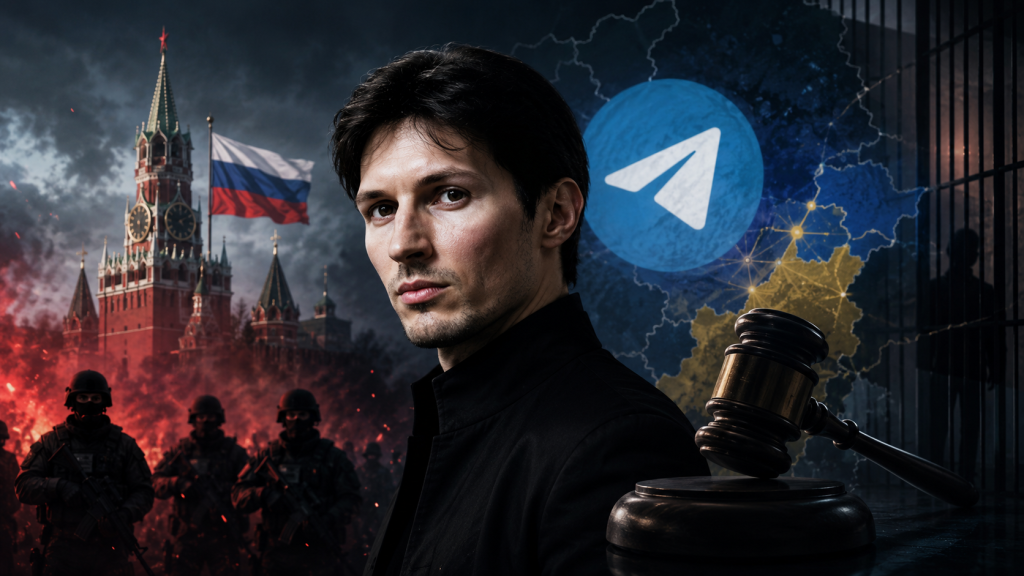
Russia has formally charged Telegram founder and CEO Pavel Durov with facilitating terrorism, escalating the long running conflict between Moscow and one of the world’s largest messaging platforms. Russian authorities have also issued an international arrest warrant for the billionaire entrepreneur, accusing him of allowing Telegram to remain a communication tool for Ukrainian intelligence services and extremist groups operating against Russia.
According to Russia’s Federal Security Service (FSB), Telegram allegedly failed to remove chats, channels, and bots that officials claim Ukrainian special services used to coordinate acts of sabotage, terrorism, cybercrime, and attacks inside Russian territory. The charges mark one of the strongest legal actions Russia has taken against Durov and further intensify government pressure on encrypted messaging platforms.
Russia Accuses Telegram of Enabling Terrorism
The FSB alleges that Telegram ignored requests to remove content linked to Ukrainian intelligence agencies and organizations that Russia classifies as terrorist or extremist groups. Officials claim these channels facilitated the planning and coordination of attacks, recruitment efforts, and cyber operations targeting Russian interests.
Russian authorities said the allegations justified criminal charges against Durov and the issuance of an international arrest warrant. If convicted under Russian law, Durov could face severe penalties. Neither Durov nor Telegram had publicly responded to the latest charges at the time of publication.
The case follows years of tension between Telegram and the Russian government. Moscow has repeatedly accused the platform of refusing to cooperate with law enforcement and of failing to moderate content that authorities consider illegal or harmful to national security. Russia has also promoted its state backed messaging platform, MAX, as an alternative to Telegram.
Telegram Faces Growing Global Regulatory Pressure
The latest action against Pavel Durov adds to Telegram’s broader legal and regulatory challenges. The messaging platform has faced increasing scrutiny from governments over content moderation, encryption, and cooperation with law enforcement agencies.
Telegram, which serves more than one billion users worldwide, has become one of the most influential communication platforms during the Russia Ukraine war. Military personnel, journalists, government agencies, and civilians from both countries regularly use the service to distribute updates, intelligence, and public information.
Durov has consistently defended Telegram’s commitment to user privacy while maintaining that the company actively removes terrorist content when it violates the platform’s policies. He has previously stated that Telegram works with international organizations to combat terrorism without compromising users’ private communications.
International Implications for Pavel Durov and Telegram
The international arrest warrant could complicate Pavel Durov’s travel and further increase geopolitical tensions surrounding Telegram. Although enforcement depends on the legal cooperation of individual countries, the move demonstrates Russia’s determination to pursue legal action against the company’s founder.
The case also highlights the growing debate over the responsibility of technology companies to moderate content during armed conflicts. Governments continue to demand faster content removal and greater cooperation from digital platforms, while technology firms argue that protecting privacy and free expression remains essential
.As the Russia Ukraine conflict continues, Telegram’s role as a major global messaging platform ensures that the company will remain at the center of discussions about cybersecurity, online speech, encryption, and digital governance.