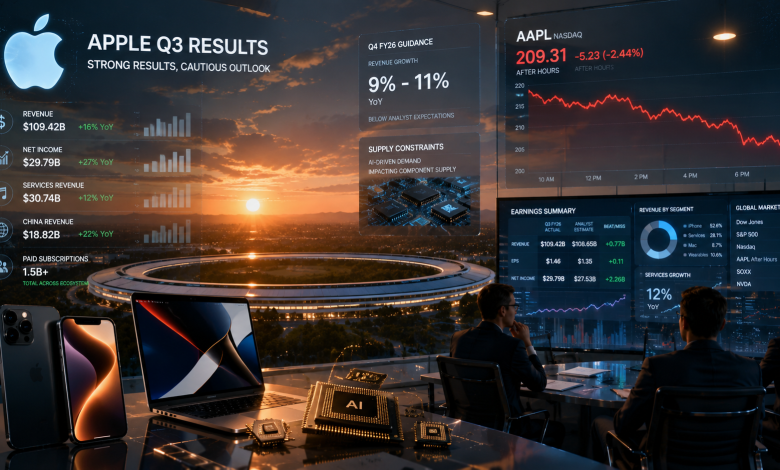
Apple reported stronger-than-expected fiscal third-quarter results, surpassing Wall Street estimates for both revenue and profit. However, a softer-than-anticipated outlook for the current quarter overshadowed the earnings beat, sending the company’s shares lower in after-hours trading.
The technology giant posted $109.42 billion in revenue for the quarter ended June, representing a 16% year-over-year increase and exceeding analysts’ expectations of approximately $108.65 billion.
Net income climbed 27% to $29.79 billion, reflecting continued strength across Apple’s hardware and services businesses.
iPhone, Mac, and Services Drive Growth
Apple’s latest results were supported by solid demand for its flagship products, particularly the iPhone and Mac lineup.
The company’s Services division, which includes the App Store, Apple Music, iCloud, Apple TV+, and other subscription offerings, generated $30.74 billion in revenue, up 12% from the same period last year.
Apple also reported strong momentum in China, where revenue increased 22% to $18.82 billion, signaling improving performance in one of its most important international markets.
The company said paid subscriptions across its ecosystem have now surpassed 1.5 billion, highlighting the growing importance of recurring services revenue.
Soft Guidance Disappoints Investors
Despite the strong quarterly performance, investors focused on Apple’s outlook for the upcoming quarter.
The company projected revenue growth of 9% to 11%, below expectations from analysts who had anticipated growth exceeding 12%.
Following the guidance, Apple shares fell more than 5% in after-hours trading, reflecting concerns about slower near-term growth.
AI Supply Chain Pressures Continue
Apple attributed part of its cautious outlook to ongoing supply constraints and currency headwinds.
The rapid expansion of artificial intelligence infrastructure has significantly increased global demand for memory chips and other critical semiconductor components, creating tighter supply across the technology industry.
The company has already adjusted pricing on some products as manufacturers continue to navigate higher component costs and supply chain challenges.
Services Remain a Bright Spot
While hardware sales remain Apple’s primary revenue driver, the Services business continues to deliver consistent growth and higher-margin recurring income.
Analysts view the segment as increasingly important to Apple’s long-term strategy, helping diversify revenue beyond device sales while strengthening customer loyalty across its ecosystem.
What Comes Next?
Investors will be closely monitoring whether semiconductor supply conditions improve over the coming quarters as AI-related demand continues reshaping global technology supply chains.
Apple’s ability to balance product demand, component availability, and pricing will likely play a key role in determining its performance through the remainder of the fiscal year.
Although the company’s guidance disappointed the market, its latest results reinforce the resilience of Apple’s business as it continues navigating an increasingly competitive and AI-driven technology landscape.