


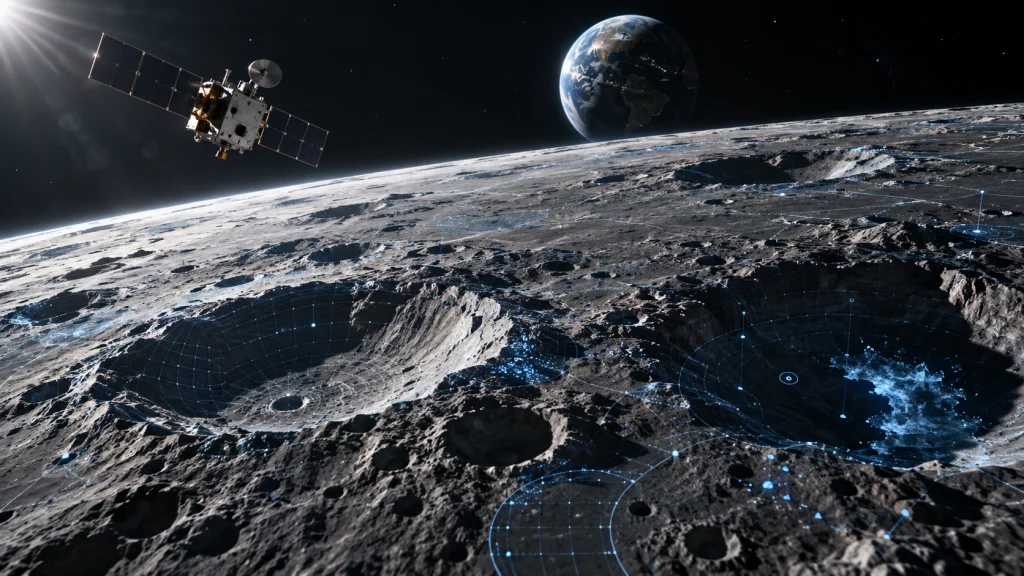
IBM and NASA have launched a new open-source artificial intelligence model designed to help scientists map the Moon in greater detail, as space agencies prepare for a new era of sustained lunar exploration.
The NASA-IBM Lunar Foundation Model was trained using more than 30 layers of lunar data collected by nine instruments across four NASA missions. The system is designed to process the enormous volume of scientific observations gathered around the Moon and identify geological features that could otherwise require extensive manual analysis.
Among its most significant capabilities is identifying potential deposits of lunar ice, as well as mapping craters and volcanic formations. Water ice is particularly important to future exploration because it could potentially provide drinking water and, after processing, resources such as oxygen and hydrogen for astronauts and spacecraft.
IBM and NASA said benchmark testing showed the model could deliver accuracy improvements of as much as 23 percent compared with existing approaches for some lunar analysis tasks. The technology could therefore help researchers evaluate potential landing locations, identify hazards and locate resources as NASA works toward establishing a longer-term human presence on and around the Moon.
The model builds on a broader partnership between IBM and NASA that has increasingly applied foundation models to scientific research. Their previous work includes AI systems for analyzing Earth observation data, weather and climate information, and solar activity. The lunar model extends that approach deeper into planetary science, where large quantities of imagery, radar observations and spectroscopy data can be difficult for researchers to analyze at scale.
The timing is significant as NASA advances its Artemis program, which is intended to return astronauts to the lunar surface and develop technologies required for increasingly ambitious missions. Better understanding the Moon’s terrain and resources could become crucial as missions move beyond short visits toward infrastructure capable of supporting astronauts for longer periods. NASA ultimately sees lunar exploration as an important testing ground for technologies and operational experience that could support future human missions to Mars.
The project also demonstrates how AI is expanding beyond commercial applications such as chatbots and coding assistants. Foundation models trained on scientific data are increasingly being developed as tools capable of finding patterns across datasets too large and complex for researchers to examine manually.
For lunar science, that could mean turning decades of observations into more detailed maps of where spacecraft can safely land, where valuable resources might exist and which regions deserve closer investigation.
As humanity prepares to return to the Moon, artificial intelligence could become an increasingly important part of deciding where explorers go next.