


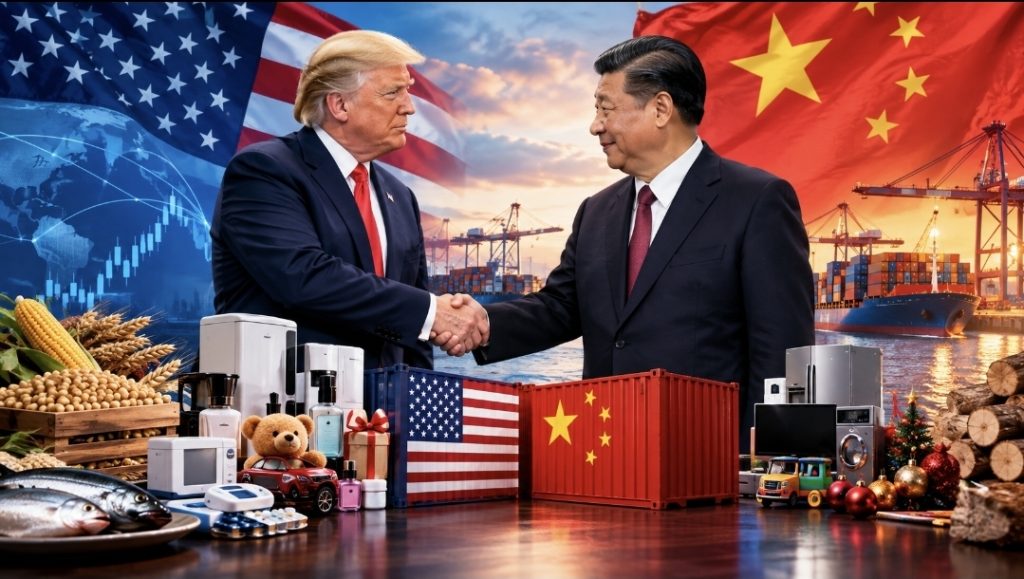
The United States and China have reached an agreement to pursue more favorable tariff treatment for $30 billion of non sensitive goods in each direction following Chinese President Xi Jinping’s three day visit to Washington and talks with U.S. President Donald Trump. The agreement marks a new development in US-China trade relations as the world’s two largest economies seek to reduce trade tensions and continue negotiations on a broader economic framework.
The White House said the U.S. China tariff agreement covers a range of products moving between the two economies. Chinese tariff reductions will cover selected U.S. agricultural products, fish and seafood, logs and wood products, cosmetics and medical devices, while the United States will provide more favorable treatment for selected Chinese products including small appliances, toys, holiday decorations and children’s car seats.
US China Trade Deal Targets $30 Billion in Goods
The new tariff arrangement emerged from the latest Trump Xi summit in Washington, where both governments worked to extend earlier trade commitments and establish mechanisms for continued economic negotiations. The two countries also agreed to operationalize the U.S. China Board of Trade, giving officials a formal channel to address market-access barriers and negotiate additional trade measures.
The agreement follows an earlier decision to extend the existing US China trade truce by two months. U.S. Treasury Secretary Scott Bessent said the extension would give Washington and Beijing additional time to work toward a potentially broader trade agreement after the previous arrangement was scheduled to expire on November 10.
The tariff changes could affect businesses involved in agriculture, consumer goods, manufacturing, medical equipment, cosmetics and other supply chains connected to the U.S. China trade relationship. Axios reported that the White House expects the measures could also ease costs for some American consumers by reducing tariffs on selected imported Chinese products.
Trump and Xi Expand Economic and AI Cooperation
Trade was not the only major issue discussed during Xi Jinping’s Washington visit. The United States and China also agreed to launch a new dialogue focused on artificial intelligence, including discussions about the risks and benefits of advanced AI systems. The two governments plan another round of AI discussions in November and agreed to create a communication channel for AI-related incidents.
The White House said the leaders also agreed to use the term “super intelligence” in their discussions, while Beijing said both sides should increase exchanges and work toward greater consensus as AI technology develops. The proposed AI communication mechanism could provide another government to government channel for addressing emerging risks associated with increasingly advanced artificial intelligence systems.
The broader summit also included agreements involving energy and international economic cooperation. According to the White House, China agreed to purchase at least 10 million metric tons of U.S. coal in both 2027 and 2028, while both governments agreed to continue work through their trade and investment mechanisms.
What the New Tariff Agreement Means for Global Trade
The latest U.S. China trade agreement comes after years of tariffs, export restrictions and supply-chain tensions between Washington and Beijing. The two economies remain deeply connected through manufacturing, agriculture, technology, consumer products and critical supply chains, making changes to bilateral tariffs important for companies that depend on cros -border trade.
The agreement does not resolve every major dispute between the United States and China. Reuters reported that both countries continue to discuss issues involving artificial intelligence, critical minerals and other areas of strategic competition, while the White House said Washington and Beijing are continuing work on supply chain concerns involving rare earths and other critical minerals.
For global markets and businesses, the $30 billion tariff arrangement provides another indication that Washington and Beijing are maintaining negotiations despite continued disagreements. The new trade mechanisms and extended truce give both sides additional time to pursue further tariff reductions and address wider economic issues that could influence international supply chains and global commerce.