


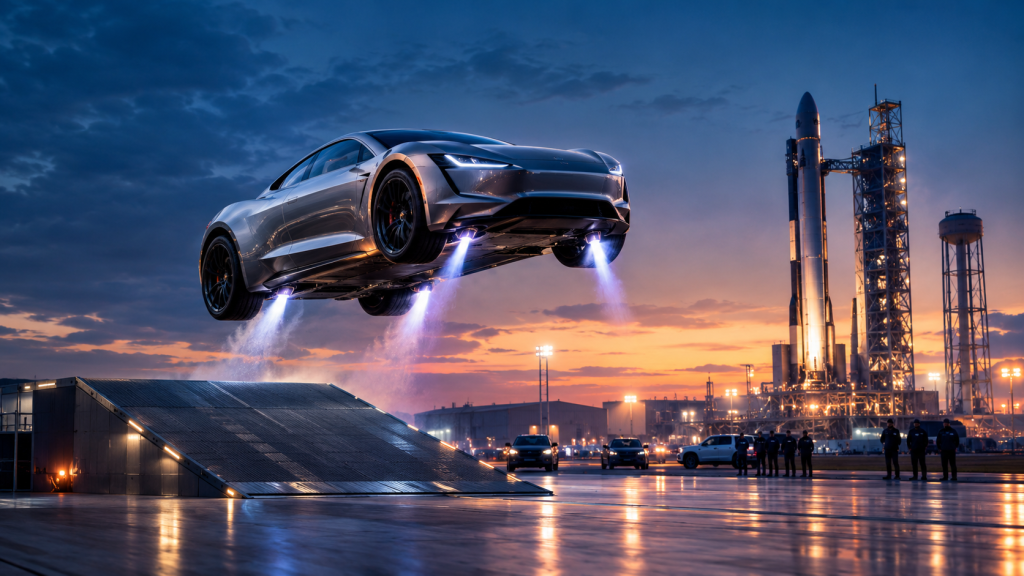
Tesla has unveiled its next generation Roadster, an electric supercar that combines high performance automotive engineering with rocket inspired technology developed in collaboration with SpaceX. Demonstrated at a SpaceX test facility in Texas on October 15, 2026, the futuristic vehicle stunned audiences with aerial manoeuvres, mid air rotations and acceleration claims that could redefine expectations for electric sports cars. The unveiling marks a significant milestone for Tesla CEO Elon Musk, who first teased the possibility of a rocket powered Roadster nearly eight years ago.
The new Tesla Roadster represents an ambitious attempt to push electric vehicle performance beyond conventional limits. During the demonstration, the vehicle climbed a specially designed ramp, travelled upside down using a suction-based system and executed a controlled mid-air manoeuvre with assistance from SpaceX developed cold gas thrusters. The demonstration also featured the Roadster jumping over other Tesla vehicles, highlighting the company’s willingness to explore unconventional applications of aerospace technology in the automotive industry.
Musk described the project as the culmination of extensive collaboration between Tesla and SpaceX engineers. Although the Roadster remains a high performance electric sports car at its core, its rocket inspired propulsion technology introduces capabilities rarely associated with passenger vehicles. However, the demonstration does not establish that the vehicle can sustain flight like an aircraft. Its airborne movements rely on specialised propulsion systems, and important questions remain about safety, regulatory approval and the practicality of bringing these features to consumers.
SpaceX Thrusters Push Electric Car Performance Further
The most striking feature of the next generation Tesla Roadster is its cold gas thruster system, which draws on SpaceX’s aerospace engineering expertise. According to details presented during the unveiling, the specialised configuration uses multiple thrusters connected to a high-pressure gas supply to generate brief bursts of thrust. The system allows the vehicle to lift off the ground temporarily and perform controlled aerial manoeuvres under demonstration conditions.
Tesla also demonstrated a suction-based system designed to generate substantial downforce. This technology helps the Roadster maintain contact with a specially designed driving surface during unusual manoeuvres, including driving upside down along a purpose built ramp. Combined with its electric drivetrain and advanced aerodynamics, the system illustrates how Tesla intends to explore performance technologies beyond conventional battery powered propulsion.
The company claims the Roadster can accelerate from zero to 60 miles per hour in less than one second in its most advanced configuration. Tesla also presented a top speed exceeding 230 mph and a driving range of approximately 300 miles per charge. These figures position the vehicle among the most ambitious electric supercars announced to date, although independent testing will ultimately determine how closely production models match the company’s performance claims.
Tesla plans to offer three configurations, Performance, Thrust and Rocket, with different capabilities and intended uses. The Performance model targets road driving, while the Thrust configuration adds acceleration thrusters. The exclusive Rocket version incorporates a more extensive propulsion system and focuses on the vehicle’s experimental airborne capabilities. Tesla describes the Rocket configuration as invite only, and its specialised hardware raises questions about passenger capacity, everyday usability and road legality.
Tesla Roadster Production Set for 2028 After Years of Delays
Despite the dramatic unveiling, customers will have to wait before they can expect the new Tesla Roadster to enter production. Tesla now targets 2028 for the start of manufacturing, extending a development programme that began with the second generation prototype reveal in November 2017. The original announcement generated considerable excitement, but repeated schedule changes have delayed the vehicle’s arrival for years.
Tesla has begun accepting reservations for the newly presented configurations. Reports following the unveiling indicate that the Performance version requires a $50,000 reservation deposit, while the Thrust model carries a $250,000 deposit. The company lists the Rocket version as invite only. These deposits represent substantial financial commitments, particularly given the lengthy development timeline and the absence of a confirmed delivery schedule for every configuration.
The Rocket version also faces practical limitations. Tesla’s demonstration showed capabilities that do not translate automatically into approval for ordinary public road use. Aviation regulations, vehicle safety standards and the risks associated with powerful propulsion systems could complicate commercial deployment. Buyers will also need clarity about maintenance, operating procedures, insurance and whether the specialised thruster technology will remain available in the final production vehicle.
The unveiling comes as Tesla increasingly emphasises artificial intelligence, autonomous driving and robotics alongside its electric vehicle business. In this context, the Roadster serves as a high-profile demonstration of engineering ambition and a showcase for technologies that could strengthen Tesla’s performance credentials. However, the car’s commercial significance will depend on whether the company can turn its impressive demonstration into a reliable, certifiable and financially viable product.
Flying Roadster Raises Questions About the Future of Supercars
The next generation Tesla Roadster highlights the growing intersection between electric mobility and aerospace engineering. By incorporating cold gas thrusters into a sports car, Tesla and SpaceX are exploring whether technologies developed for spaceflight can deliver new forms of acceleration, stability and vehicle control on the ground.
Nevertheless, the Roadster’s most spectacular features remain experimental from a practical consumer perspective. Brief airborne manoeuvres do not make a car equivalent to a conventional flying vehicle, which must address sustained lift, navigation, emergency procedures and a different set of safety requirements. Tesla will need to demonstrate that its technology can operate consistently outside controlled test environments before consumers can assess its everyday value.
The project also reinforces the importance of execution in the electric vehicle industry. Tesla has attracted attention through ambitious product announcements before, but the Roadster’s extended development history illustrates the difference between unveiling a prototype and delivering a production ready vehicle. The company’s 2028 manufacturing target will therefore be a critical milestone for prospective buyers and industry observers.
For the wider automotive sector, the Roadster offers a glimpse of how manufacturers might combine electric drivetrains, advanced aerodynamics and aerospace-inspired systems to distinguish premium vehicles from conventional supercars. Yet the ultimate measure of success will not be the spectacle of a vehicle briefly lifting off a test track. It will be whether Tesla can deliver the promised performance, maintain acceptable safety standards and bring the technology to customers without further substantial delays.
For now, Tesla’s rocket equipped Roadster stands as one of the industry’s most unconventional performance projects. Its unveiling has renewed interest in the future of electric supercars, but its long-term impact will depend on production progress, independent performance verification and the practical limits of putting rocket inspired technology on public roads.