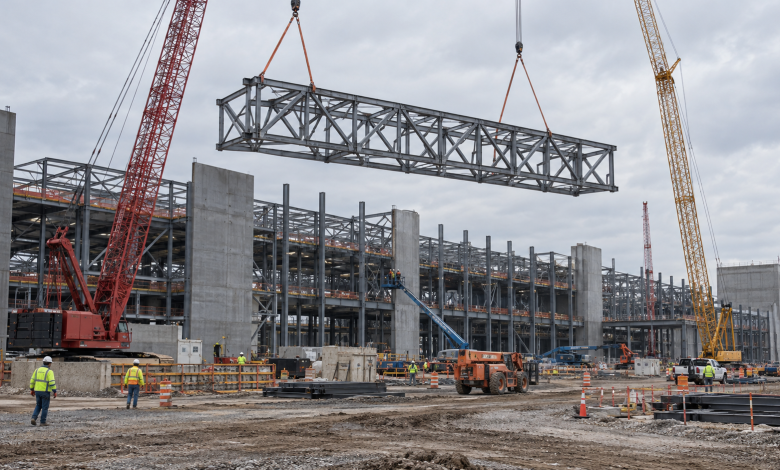
Intel Ohio fab construction has reached a visible milestone: crews installed the first major structural truss at the company’s Ohio One project in New Albany. Intel described the work in an October 21 update, but the milestone does not change its current target for first operations in the 2030–2031 window. The site remains years away from chip production.
Intel Ohio fab reaches a structural milestone
The truss installation marks progress from foundation work toward the above-ground structure of the first fab. Intel’s update places the Ohio work alongside activity at other U.S. manufacturing locations, including Arizona, Oregon, New Mexico, and California. The company said its broader network supports a supply chain involving more than 4,500 suppliers across 49 states.
The milestone is evidence of construction activity, not proof that the site is ready to manufacture chips. Intel’s own update describes the truss as one step in a longer build-out. Readers should separate visible progress from the later work required to install equipment and qualify production.
For the Intel Ohio fab, the first truss is a construction milestone, not a change to the stated operating timetable.
New hope for 2030 after the first truss
Intel’s stated schedule calls for the first Ohio One module to complete construction in 2030 and begin operations between 2030 and 2031. The second module is planned to complete construction in 2031, with operations expected in 2032. These are company targets, not guarantees, and future updates may change them.
The scale helps explain why a single construction milestone is only one part of the story. Intel announced an initial investment of more than $28 billion for two leading-edge factories at the site. Its February 2025 timeline update said construction would proceed at a slower pace while Intel aligned the project with business needs and market demand.
Construction progress is not chip production
New semiconductor capacity takes years to plan, build, equip, and qualify. Additional factories can diversify where advanced chips are manufactured, but they cannot relieve near-term supply pressure before production begins. The commercial impact will also depend on customer demand, process technology, yields, and how quickly equipment reaches volume manufacturing. The Intel Ohio fab still needs equipment installation, process qualification, and production ramp-up before it can supply chips.
That distinction matters for readers following chip supply. Construction progress is encouraging for the project, while the long schedule means the Ohio site should not be counted as near-term production capacity. Intel’s Ohio overview says the nearly 1,000-acre campus could accommodate as many as eight factories and supporting operations at full build-out. That is potential site capacity, not a commitment to build all eight now.
How Ohio fits Intel’s manufacturing network
The Ohio project is part of Intel’s broader effort to expand U.S. chip manufacturing, alongside ongoing work at other sites. It also sits within a market where demand for advanced computing hardware remains a major focus. Kernel.news has covered NVIDIA’s chip business and semiconductor demand, a related view of the capacity challenge.
What comes next for the Intel Ohio fab
The next meaningful milestones include continued structural work, equipment installation, hiring, and any revised schedule or customer commitments. Until Intel announces otherwise, the careful reading is that the first truss is installed and the first fab remains years away from its stated operational window.
Sources: Intel Foundry, October 21, 2026; Intel, February 28, 2025; Intel in Ohio.