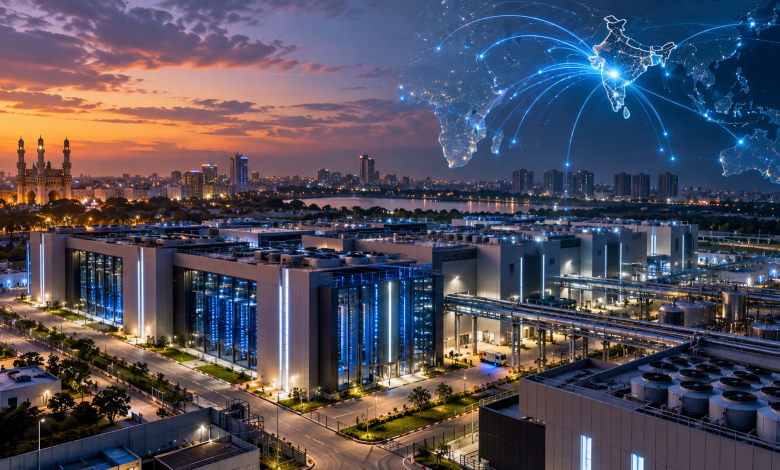
Microsoft is expanding its artificial intelligence infrastructure in India, announcing that its new India South Central cloud region in Hyderabad will serve as a strategic hub for Asia and the Global South.
The announcement was made on September 21 at Microsoft’s AI Infrastructure Summit in New Delhi, where the company outlined plans to bring AI-ready computing capabilities closer to organizations across the region.
According to Microsoft, its datacenter regions across India are now equipped with infrastructure designed to support advanced AI workloads, including AI-capable hardware, high-efficiency cooling systems and the underlying cloud platform required to run increasingly demanding AI applications.
Why Hyderabad Matters
The new India South Central region is built around a three-zone architecture designed to provide resilience while allowing Microsoft to scale capacity as demand for cloud and AI services increases.
Microsoft says the infrastructure is also designed to address applicable data protection, cybersecurity and sector-specific requirements in India.
One notable element is the use of high-efficiency mechanical cooling that Microsoft says delivers effectively zero water use for cooling. This is becoming increasingly relevant as the rapid construction of AI datacenters raises questions around energy and water consumption.
AI Infrastructure Is Becoming the New Battleground
The announcement reflects a broader shift in the technology industry.
The AI race is no longer only about which company has the most capable model. Increasingly, the competition is also about where AI can be deployed, how much computing capacity is available, and whether the infrastructure can support AI workloads at commercial scale.
Microsoft’s move places India closer to that infrastructure race.
The company says its Indian datacenter footprint is contributing to a growing datacenter economy, while citing a Boston Consulting Group estimate that India’s datacenter ecosystem could generate between $140 billion and $200 billion in economic output through 2030.
Microsoft Also Expands AI Skills Push
Infrastructure is only one part of Microsoft’s strategy.
The company also announced that it has equipped more than 10 million people in India with AI skills, as part of a broader commitment to reach 20 million people by 2030.
That combination of infrastructure and skills could become increasingly important as businesses move from experimenting with AI tools toward deploying AI systems inside everyday operations.
What It Means for the Global South
For countries across the Global South, the significance extends beyond Microsoft’s cloud business.
More regional AI infrastructure can reduce the distance between organizations and the computing resources needed to build and operate AI applications.
It could also encourage more companies, developers and institutions to build AI products around regional markets instead of relying entirely on infrastructure located elsewhere.
The bigger question is whether investments like this will translate into affordable access, local innovation and meaningful economic opportunities.
For now, Microsoft’s Hyderabad expansion signals that AI infrastructure is becoming a strategic piece of the digital economy across emerging markets, not just a Silicon Valley story.
Kernel News Takeaway
The next phase of the AI race may be decided less by who has the loudest model announcement and more by who builds the infrastructure capable of putting AI into the hands of millions.
Microsoft is betting that India, and increasingly the wider Global South, will be a major part of that future.