In a move that could redraw the boundaries between aerospace and artificial intelligence, SpaceX is set to merge with xAI, according to a joint announcement from founder Elon Musk. The deal would consolidate Musk’s ambitions across space exploration, advanced computing, and digital infrastructure under a tighter strategic umbrella.
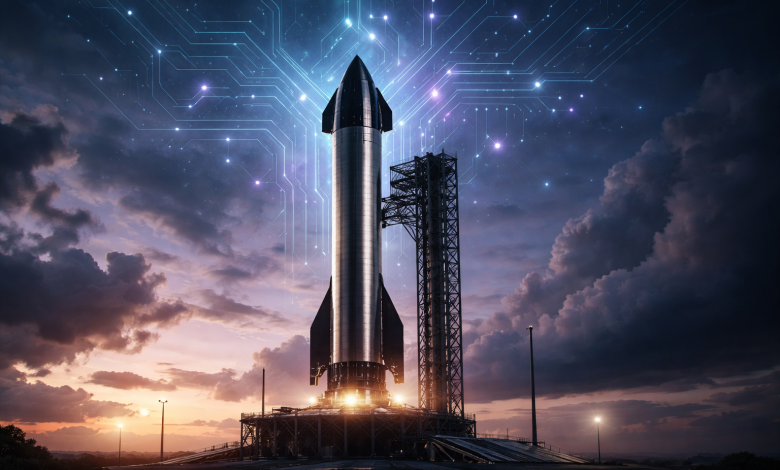
The merger positions the rocket manufacturer and the AI research firm as complementary forces. SpaceX brings launch capabilities, satellite networks, and deep engineering talent. xAI contributes large language models, data infrastructure, and research focused on artificial general intelligence. Executives say the combined entity will accelerate AI deployment across mission planning, spacecraft autonomy, and satellite communications.
Musk, who also oversees X, has increasingly aligned his ventures around AI development. Integrating xAI’s models into SpaceX operations could enhance everything from Starship flight simulations to real time data analysis aboard orbital missions. Insiders suggest that future spacecraft may rely heavily on onboard AI copilots trained on both aerospace and internet scale datasets.
Industry analysts view the transaction as a vertical integration play. By embedding proprietary AI directly into rockets, satellites, and ground systems, the combined company could reduce reliance on third party software providers. This may offer a competitive edge as global launch rivals invest heavily in automation and next generation navigation systems.
Regulatory scrutiny is expected, particularly given Musk’s expanding footprint across transportation, communications, and artificial intelligence. Lawmakers in Washington and Brussels have already signaled closer examination of AI consolidation among major technology players. Still, investors reacted positively in early private market trading, betting that tighter coordination between hardware and software will streamline innovation cycles.
Strategic Implications for the AI Space Race
The merger could also reshape the broader AI landscape. Space based data collection offers vast streams of imagery, telemetry, and environmental metrics that can be used to train advanced models. By controlling both orbital assets and AI systems, the company may unlock new commercial applications in climate modeling, defense analytics, and global broadband optimization.
For Musk, the deal reinforces a long held thesis that humanity’s future depends on both multiplanetary expansion and machine intelligence. Bringing those missions under one corporate roof may allow faster iteration and deeper technical integration than if they remained separate enterprises.
Whether the merger delivers on its promise will depend on execution. Combining two highly specialized engineering cultures presents managerial and technical challenges. Yet if successful, the union of rockets and algorithms could mark a pivotal chapter in the evolution of private spaceflight.