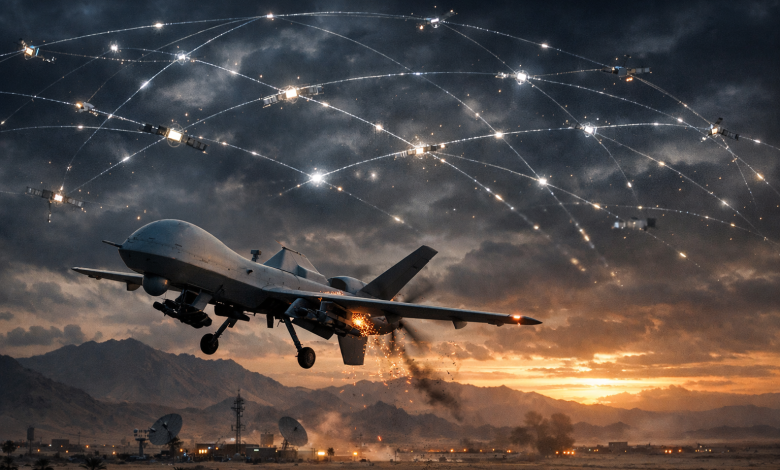
A recent outage in Starlink has disrupted drone testing operations conducted by the Pentagon, raising fresh concerns about the military’s reliance on commercial satellite infrastructure operated by SpaceX.
According to officials familiar with the incident, the disruption occurred during a series of unmanned aerial system trials that depended on continuous satellite connectivity for navigation, data transmission, and real time command operations. The outage temporarily severed links between ground control and test drones, forcing a halt to critical exercises.
The event has intensified scrutiny over how deeply integrated Starlink has become within US defense operations. Initially deployed as a civilian broadband solution, the low Earth orbit satellite network has rapidly evolved into a strategic asset for military communications, particularly in environments where traditional infrastructure is unavailable or compromised.
Defense analysts note that while Starlink offers significant advantages such as low latency and global coverage, its centralized ownership presents a single point of vulnerability. Any disruption, whether technical or deliberate, can have cascading effects on missions that rely heavily on uninterrupted connectivity.
This is not the first time Starlink’s role in military contexts has drawn attention. Its deployment in conflict zones has demonstrated both its transformative potential and the complexities of relying on privately owned systems for national security functions. The Pentagon has increasingly explored ways to integrate commercial technologies into its operations, but the latest outage underscores the risks inherent in that strategy.
Officials have not disclosed the precise cause of the outage, and SpaceX has yet to release a detailed public explanation. However, sources suggest that the interruption was brief, with service restored before any long term damage occurred. Even so, the incident is expected to prompt internal reviews within the Department of Defense regarding redundancy measures and contingency planning.
The broader implication is clear. As modern warfare becomes more dependent on digital infrastructure, the boundary between civilian technology providers and military operations continues to blur. The Starlink outage serves as a stark reminder that even cutting edge systems are not immune to failure, and that resilience must remain a central priority.