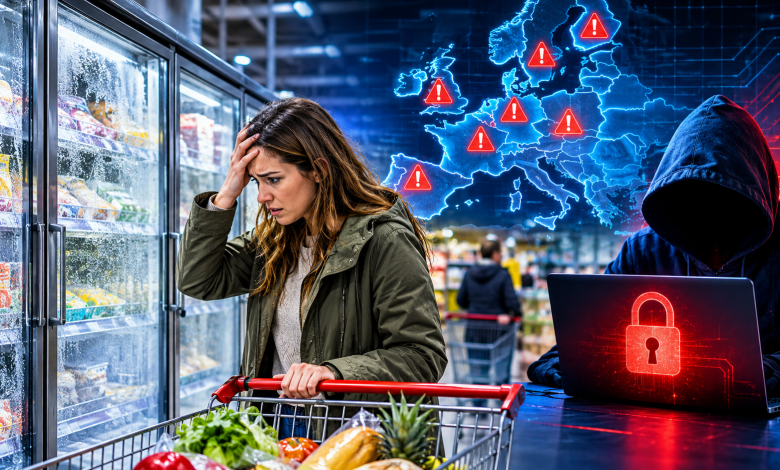
A wave of cyberattacks targeting supermarket refrigeration systems has disrupted grocery stores across Europe, forcing retailers to remove chilled and frozen products from their shelves and dispose of potentially spoiled food. The incidents have affected refrigeration infrastructure in multiple countries, raising concerns about the cybersecurity of connected supermarket equipment and the safety of food supply chains.
Sweden, Belgium, Luxembourg, Ireland, the Netherlands, Estonia and Finland are among the seven countries initially identified in the latest wave of disruptions. However, further reports from Italy and Portugal have since expanded the number of affected European countries to at least nine, highlighting the growing geographical reach of the incidents.
The attacks reportedly involved unauthorized access to remotely managed refrigeration systems, allowing attackers to manipulate temperature settings, disable cooling functions or activate defrosting modes. Consequently, some supermarkets experienced significant temperature increases that threatened thousands of food products.
Sweden and Belgium Report Major Supermarket Refrigeration Disruptions
Sweden and Belgium appear to be among the hardest hit countries, with multiple supermarket chains reporting disruptions to their refrigeration infrastructure. In Sweden, supermarket operators ICA and Coop experienced problems affecting several stores. Some refrigeration units reportedly reached temperatures as high as 50°C, forcing affected retailers to remove food products and assess their losses.
In Belgium, the situation has affected several major supermarket operators, including Delhaize, Carrefour, Colruyt and Intermarché. Reports indicate that approximately 40 Delhaize stores and 15 Carrefour locations experienced refrigeration problems, alongside other affected retail outlets.
The disruptions also affected Luxembourg, where four Delhaize stores reportedly experienced refrigeration incidents. These developments have raised concerns about the security of remotely managed cooling infrastructure used by supermarket chains across European markets.
Ireland, Netherlands, Estonia and Finland Also Report Incidents
Ireland has reported refrigeration disruptions at 13 SuperValu stores. Musgrave, the retailer’s parent company, confirmed the incident, prompting affected stores to remove chilled and frozen products as a precaution. The company subsequently worked to resolve the problems and restore normal refrigeration operations.
In the Netherlands, at least 17 businesses reportedly experienced refrigeration disruptions. Most affected locations were smaller retailers, butcher shops and food storage facilities, demonstrating that the incidents extend beyond major supermarket chains.
Estonia also reported a cyberattack targeting refrigeration controls at a supermarket location. Attackers reportedly manipulated freezer temperatures to reach approximately 50°C. However, the incident was detected and addressed within roughly 10 minutes, preventing significant food losses.
Finland has experienced a comparatively limited impact, with minor temperature irregularities reported at some K Group stores. Authorities and retailers have investigated the incidents, although the available reports indicate that the situation remains significantly less severe than in Sweden and Belgium.
Meanwhile, additional reports from Italy and Portugal have expanded the geographical scope of the incidents. Portugal’s Mosqueteiros group confirmed refrigeration problems at seven Intermarché stores, while Italian reports identified disruptions at several Coop supermarkets and other businesses.
European Cybersecurity Concerns Grow as Investigations Continue
The latest supermarket refrigeration disruptions follow a similar cyberattack in France on October 12, 2026, when hundreds of grocery stores experienced problems after attackers UKmanipulated remotely controlled cooling systems. That incident forced retailers to discard significant quantities of food and raised questions about the cybersecurity of connected industrial equipment.
The repeated incidents highlight the risks associated with internet connected refrigeration infrastructure, particularly systems that allow external access to temperature controls and other operational functions. Attackers who compromise these systems can disrupt essential supermarket operations without directly targeting payment networks, customer databases or traditional computer infrastructure.
Danish refrigeration technology manufacturer Danfoss has also been mentioned in connection with some affected systems. However, investigators have not established that every incident across Europe originated from the same vulnerability or coordinated operation.
No group has publicly claimed responsibility for the latest incidents, and investigations into the attacks remain ongoing. European authorities are increasingly concerned about the potential impact of cyberattacks on critical commercial infrastructure, food distribution and consumer confidence.
As more countries report similar disruptions, the incidents highlight why retailers must strengthen cybersecurity protections around industrial control systems, secure remote access and regularly update connected refrigeration equipment.